



















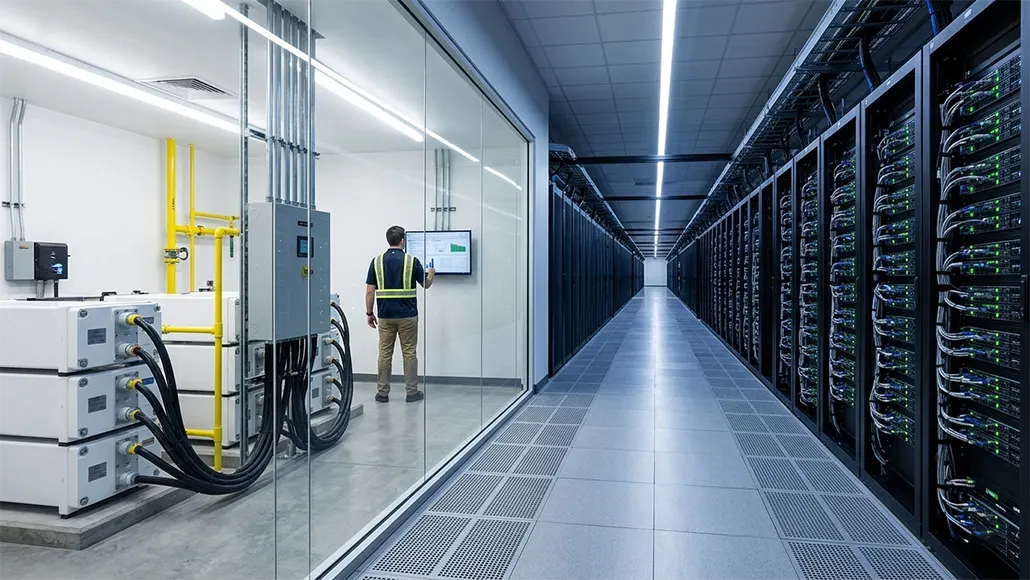

Just imagine walking into a huge data center where there exist rows of servers that seem to go on forever. The fact is that as the need for computing power grows, the noise of each rack gets louder. Each rack is constantly processing data that’s related to cloud apps and AI models, as well as streaming platforms. However, the most important part is not the shiny server, but it is the power that keeps everything running.
Notably, if the power goes out, services can come to a halt in seconds and prices can go through the roof. Hence, the operators are looking for cleaner, more dependable ways in order to power their tech machines while at the same time ensuring that their sustainability goals are met.
This very search has led to an exciting partnership. Jiangsu Guofu Hydrogen Energy Equipment Co., Ltd., BTE Inc., as well as Hylium Industries, Inc., recently entered into a three-way supply agreement to work together on a 10MW-class demonstration hydrogen power system that is made just for data centers in North America. According to the agreement, Guofu is going to design and build the hydrogen production unit via using natural gas as a feed stock. BTE is going to offer its tried-and-true fuel cell modules, and the U.S. subsidiary of Hylium is going to handle engineering, delivery, and installation as well as customer outreach.
The idea is to go ahead and take advantage of the strong data center market that exists in North America and demonstrate how hydrogen-powered servers can actually run without making use of traditional fuels.
The Chairman of Jiangsu Guofu, Mr. Wu Pinfang, was in attendance to sign the three-way supply agreement. This shows that Guofu is indeed expanding into new areas. BTE has already begun works on hydrogen power pilots in the U.S., which can be regarded as a great start. Hylium’s U.S. arm goes on to bring established sales channels and, also with it, project execution know-how. It is more like a chess game where every player goes on to bring a key piece. Put together, they all cover everything right from making hydrogen to going ahead and powering data center loads.
A closer look at the tech
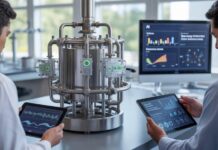
It is well to be noted that the natural gas reforming hydrogen production system of Guofu is the prominent part of this demo. It makes use of a combination of heat and catalysts in order to pull hydrogen molecules out of natural gas, then cleans and sends them to the site. Fully electrolytic green hydrogen is indeed the holy grail, but it’s not big enough yet. Guofu’s method goes on to strike a practical balance between cost, reliability as well as carbon footprint. One can also avoid the headaches that come with enormous storage tanks and complex logistics.
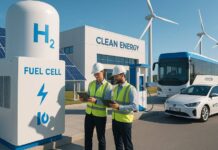
The Proton Exchange Membrane – PEM fuel cell modules by BTE make power by mixing hydrogen and oxygen, which makes electricity, a little heat, and also water vapor, but not smoke or combustion. These hydrogen fuel cells happen to run much cooler as compared to other kinds and turn on and off quickly. Since they are modular, one can connect just a few kilowatts or build multi-megawatt stacks, which can easily change to meet the requirements of a data center.
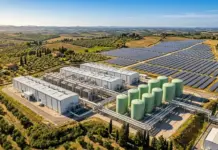
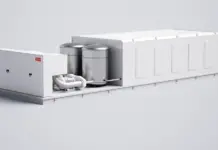
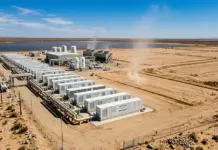
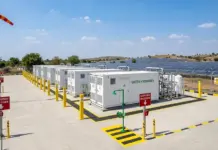
This setup is essentially a plug-and-play, skid-mounted mini power plant that makes hydrogen and fuel cells work in tandem. Put it next to the server room, plug it in, and watch it work. One does not need to get fuel delivered as often and can be less reliant on the grid. This gives the data center the power to ride out outages or avoid price spikes easily.
Why North America?
It is well to be noted that data centers all over North America are really stressed out. Grids are already pushed to their limits by rising AI workloads as well as cloud traffic, specifically during the hottest summer months. This holds true right from coastal mega-hubs to inland edge sites. Besides, energy prices are going up, and utilities cannot fix everything all at once. Operators require having temporary fixes that do not hurt uptime or cost too much.
That is when strong hydrogen infrastructure and the newest fuel cell technology come into the picture. Data centers can switch from diesel generators, which are loud, dirty, and require a lot of maintenance, to clean, steady power from hydrogen on-site. It’s a win – less carbon emissions, much quieter operation, and much lesser generator drills at night. The group is indeed sure that this pilot is going to show that hydrogen is ready for widespread adoption, whether one has a large campus or an intimate edge facility.
Business angles and market stakes
When the news broke, shares of Jiangsu Guofu on the Hong Kong Stock Exchange surged around 4.85%. That spike shows that investors are highly engaged when it comes to hydrogen production. So, what is Guofu’s public goal? Lock in a minimum of 1 GW of hydrogen power orders for data centers throughout the world in the following three years. This could as well go ahead and change the mix of its revenue and also solidify its place as one of the top clean-energy equipment suppliers.
As far as BTE Inc. is concerned, this partnership strengthens its position as a trusted supplier of fuel cell technology with a track record in the U.S.
They will use what they learned from past demonstrations to get the most out of their modules. Hylium Industries, on the other hand, plans to improve its go-to-market playbook by getting feedback from pilots to make engineering, procurement, and construction workflows more efficient. They work together so as to create a complete powerhouse, right from research and development to manufacturing to roll out and support after launch.
Wider effects and future prospects
This pilot could, as well, go on to have a big effect on the ecosystem. Grid operators might get a break as big buildings let go of their peak loads. Natural gas suppliers could also create new demand when it comes to reforming feedstock. To keep pace, battery storage companies and diesel genset makers will have to step up their game or work together on hybrid solutions.
Policy watchers are going to be on the edge of their seats as well. If this demo works, regulators might speed up incentives for making hydrogen and hydrogen fuel cells. Switching from diesel generators to fuel cells cuts down on NOx and along with it particulates, which makes the air around data center campuses cleaner. And even though this method depends on reforming natural gas for now, it sets the tone for a future with total green hydrogen through electrolysis.
In the future
The fact is that not all of the information is accessible yet. The exact timelines, along with site location, as well as capital costs, are still private. The partners say that changes in the market or implementation risks could change schedules or objectives for performance. Once the systems are up and running, both analysts and operators are going to focus on uptime, efficiency, and the overall cost of ownership to determine how this stands up against other clean energy options.
Nonetheless, this project is a big step towards bringing hydrogen production and fuel cell technology closer on a large scale, which data centers really need. If the consortium goes on to meet its goals, hydrogen could soon go from being just a backup fuel to the main power source for data centers throughout the world. That could as well start the next big chapter when it comes to sustainable energy in a world that demands more computing power with less carbon.