










Hypermotive and Vanguard STS are being promoted as significant players in the transition from experimental hydrogen rail projects to larger, real-world uses that can eventually support freight, heritage & regional passenger travel. People are saying that this partnership is a very important step toward making platforms that can be used consistently across various kinds of rail services and can be certified as safe. This has big effects on sustainability, tourism development, and future technical standards.
A partnership based on scalable hydrogen rail
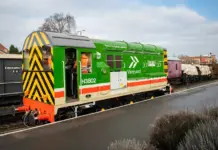
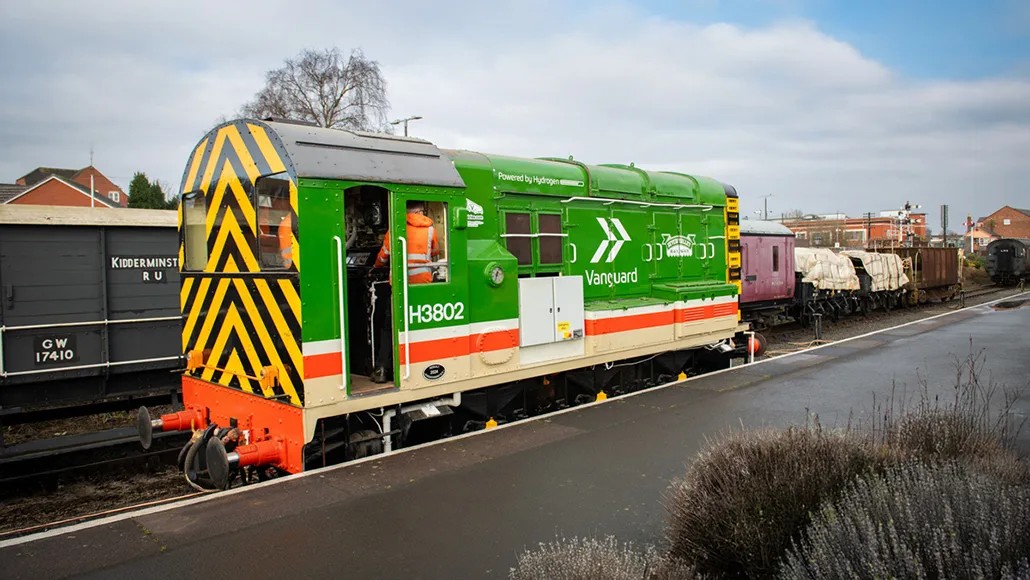
This agreement creates a formal partnership between Hypermotive and Vanguard STS to help put commercial hydrogen-powered rail vehicles and related equipment into use. The partnership has been underscored in connection with the launch of HydroShunter at Severn Valley Railway, where the technology is being demonstrated in a working heritage setting. The partnership is set up so that Hypermotive’s Hypercore control technologies can be built into Vanguard’s hydrogen powertrain platforms right from the start.
It is well to be noted that Hypercore is first being added to the HydroShunter, which is a locomotive that was made by changing a Class 08 diesel shunter into a hydrogen battery hybrid. After that, it will be used in more hydrogen rail programs in the UK and around the world. This way, a common control as well as systems integration philosophy is being used on many projects instead of just one-off prototypes. Hypermotive has been working on integrating hydrogen fuel cell systems since 2016, and they are bringing that experience directly to this project. They were also involved in HydroFLEX, which is the first mainline-approved hydrogen train based on a Class 319 EMU in the UK.
HydroShunter as a platform for retrofitting
The launch of HydroShunter is being shown off as a great example of how a retrofit strategy can be made use of to make older rolling stock less harmful to the environment. The NEO1 modular hydrogen battery hybrid powertrain from Vanguard is being added to a BR Class 08 shunting locomotive from the 1950s so as to give it a new purpose. In this setup, the original diesel engine is being taken out, but the strong traction motors, frame, and core structure of the locomotive remain. This shows how one can upgrade an old fleet of vehicles without having to buy new ones.
From a technical point of view, a series hybrid architecture is being used. In this configuration, the traction battery provides high power for acceleration and also short bursts of demand, whereas the hydrogen fuel cell mainly acts as a constant generator in order to keep the battery charged. Through keeping the fuel cell running in a fairly steady way, thermal and mechanical stress is lowered, which should go on to make it more reliable and last longer. Vanguard says that the system is being set up with about 80 kW of fuel cell power, a 230 kWh battery, space for around 60 kg of hydrogen, about 250 kW of traction output, an operating window of about 20 hours, and also a top speed of about 15 mph. All of these are indeed perfect for yard and depot as well as heritage railway work.
The bigger picture is that many Class 08 locomotives are getting ready to retire because their diesel engines are old and of course no longer useful, even though most of their mechanical parts still happen to be in excellent shape. The HydroShunter is being used as proof that decarbonization can be done via targeted retrofits rather than buying a whole new fleet. It indicates that a modular power pack like NEO1 can be added to the existing locomotives.
Effects on tourists and passengers
Although the HydroShunter is being used as a shunting and industrial locomotive, its effects can very well be seen in both the experiences of passengers along with the potential for tourism. Hydrogen battery shunters are expected to cut down on diesel exhaust and noise in busy stations and depots as well as heritage railway hubs where passenger trains are put together, moved around, or kept. This kind of a cleaner operating environment is being sold as a way to make the air better and make travelers, staff, and visitors more comfortable, especially in heritage stations that attract a lot of tourists.
The HydroShunter is being used on preserved and tourist-oriented lines like the Severn Valley Railway in order to show that preserved railways can lower the fuel costs and emissions while still running vintage rolling stock, which is a big part of what makes them interesting to visitors. This helps heritage railways stay open for a long time as attractions for eco-friendly tourists and potential donors who want to see real sustainability efforts. At the same time, the technology stack that powers HydroShunter, which includes fuel cell modules, batteries, and Hypercore controls, is very similar to the technology stack that powers the passenger concepts like HydroFLEX.
It is well to be noted that HydroFLEX is a bi-mode unit that can switch between hydrogen power and overhead electrification when it is available. It can also make sure to run on hydrogen power on branch lines that are not electrified. This sort of a flexible feature is being stressed as especially useful for routes that are geared toward tourists but may not be able to be fully electrified because of cost or visual and environmental concerns. Hydrogen trains, which only let out water vapor and are quieter than diesel trains, are being pushed as effective for routes via national parks, coastal corridors, and heritage landscapes where both pollution and intrusive infrastructure are important issues.
Sustainable and emerging benchmarks
The Hypermotive and Vanguard STS partnership is being built around a few key ideas when it comes to sustainability. When one uses them, hydrogen fuel cells make electricity, and only water is a direct byproduct. This means that the locomotive itself does not release any NOx, particulate, or CO₂ emissions. Also, the approach is being promoted as a way to extend the useful life of rolling stock, lower the carbon footprint of manufacturing and scrapping, and, at the same time, make better usage of existing material resources through retrofitting old locomotives rather than buying new ones.
The design and certification work on HydroShunter is also helping to enhance hydrogen safety standards for rail. Vanguard has said that the development process has helped set new standards so as to safely integrate, store, and make use of hydrogen systems on trains. These standards are being made with the goal of getting them approved for use on mainlines in the future. This will make it easier for regulators to accept hydrogen traction more widely. Both the NEO1 powertrain and the Hypercore control systems are being called modular and scalable at the same time. This means that the same basic architecture can be set up for shunters, small industrial locomotives, multiple units, and eventually full passenger sets.
Policy alignment is a key part of the story. The UK government has supported hydrogen demonstration projects like HydroFLEX as part of its efforts to get rid of diesel-only trains and meet net-zero commitments in the transportation sector. In light of this policy, the Hypermotive and Vanguard partnership is getting presented as directly helping the decarbonization goals of the country while also providing the industry with useful experience, datasets, and safety cases.
Placing in the global development of hydrogen rail
To put this project in context, there are a number of other hydrogen rail projects being talked about. The HydroFLEX in the UK is already known as a demonstration passenger EMU having a bi-mode hydrogen-electric configuration. It was used during COP26 and other tests, and people see it as a possible platform when it comes to future regional tourism routes. The Coradia iLint has been running as a regional passenger train in Germany and nearby countries in continental Europe. It is marketed as a zero-emission option on non-electrified lines, which, by the way, are often popular with tourists.
In India, there are plans for hydrogen-powered trains to run on heritage and scenic routes for tourists. These plans are often called hydrogen for heritage and are meant to promote ecotourism to famous destinations as well as routes. The goal of these trains is to make travel quieter and cleaner while also making it easier for people to visit areas that don’t have as much electricity. These projects, along with the HydroShunter, show that hydrogen is especially useful for non-electrified rural or scenic lines, where tourism is important, where governments are strongly encouraging green signaling, and where old diesel fleets can be replaced or retrofitted with modular hydrogen-based stock.
In this larger context, the partnership between Hypermotive and Vanguard STS is being seen less as a single technical experiment and more like a step toward a standard toolkit for hydrogen rail. The project is being set up as a model for other railways to use when they want to decarbonize secondary and regional routes where full electrification is too expensive. This is done through combining retrofit strategies, modular hardware, and codified safety practices, as well as policy support. This is how the groundwork is being laid for tomorrow’s green scenic trains, which are going to be used by everyday passengers as well as international tourists who want to travel by train without causing any impact.