



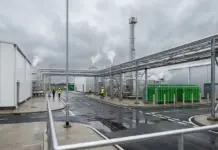
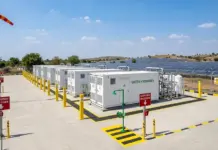
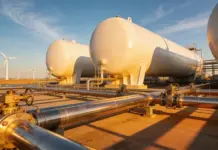





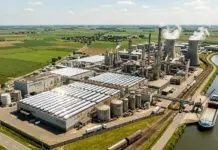







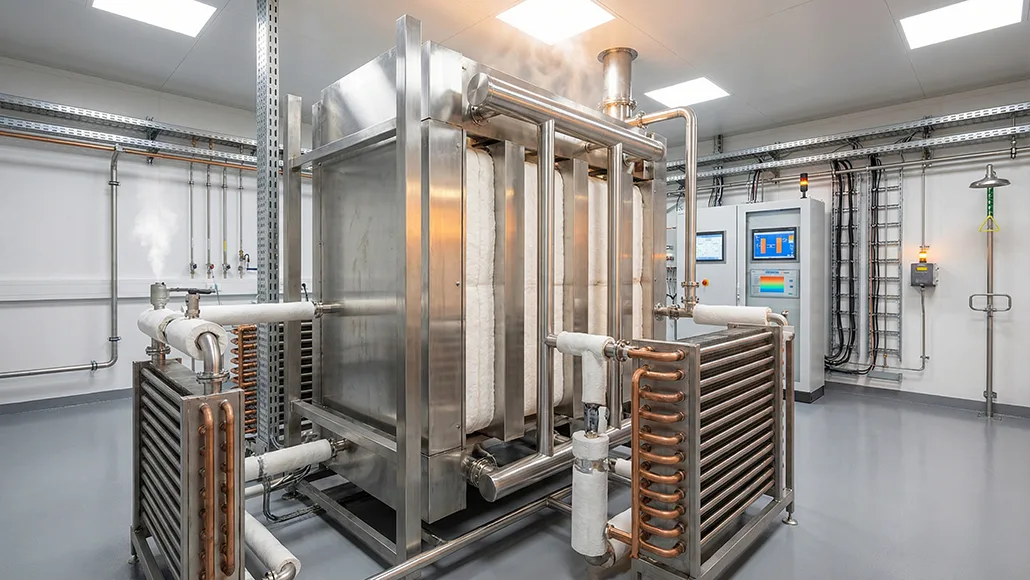

We often hear big goals, but KIMM’s most recent achievement makes its goal of being carbon neutral by 2050 seem possible. The team went on to set up the first 20kW-class anode SOEC system of South Korea, and it’s been running for more than 3,000 hours with an electrical efficiency of over 83%. This isn’t just a trick in the lab rather, it is a pilot-scale plant that makes use of waste heat from industry in order to cut costs when it comes to hydrogen production.
With help from MOTIE/KETEP, KIMM teamed up with POSCO Holdings, the Korea Institute of Energy Research – KIER and KCERACELL in March 2026. They made about six normal cubic meters of hydrogen every hour through using captured heat so as to preheat steam to about 200°C. The outcome? Compared to a regular electrolyzer, this one can use up to 15% less electricity. Dr. Young Sang Kim, who is in charge of the project, thinks that such enhancements in efficiency could as well help cut hydrogen costs by almost a quarter as one gets started.
Why It Matters to Integrate Waste Heat
Electrolysis has always relied on electricity, so the fact is that every kilowatt-hour is important. The system needs less electricity to split water into hydrogen and oxygen because it can use low-grade waste heat from nearby industrial processes, like steel furnaces. It’s indeed a great way to make the whole system work better and also take some of the load off the national grid, especially since Korea is moving away from coal, which still went on to make up almost 29% of its power mix in 2025.
This kind of energy swapping is a classic example of industrial decarbonization and follows the rules of industrial symbiosis, where one waste coming from one factory becomes another factory’s input. It is well to be noted that South Korea is short on resources, so getting the most out of everything, right from green hydrogen to sustainable energy assets, means that electricity prices will be more stable and the transition to hydrogen production is going to be smoother.
SOEC High-Temperature Electrolysis
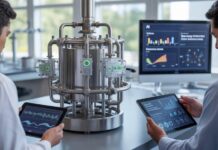
So, what makes an SOEC – supported solid oxide electrolysis cell work at 700–800°C? It makes use of ceramic materials in order to move oxygen ions across a thin layer of electrolyte. The anode in the anode-supported design of KIMM is structural, which lets the engineers make the electrolyte layer thinner and the current density higher. Reaching that 3,000-hour mark with stable performance is not something to brag about, but rather it is a big step toward the durability one would need for real-world use.
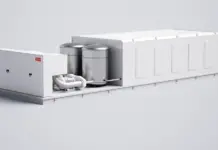
But the cell stack isn’t everything. The pilot from KIMM had custom manifolds for routing gas and high-efficiency heat exchangers, as well as top-notch insulation. Smart control algorithms change the temperature gradients all the time in order to avoid thermal stress. What does it mean? A modular stack assembly that one can make bigger by adding more parallel units. This is a good idea if one is looking at megawatt-class systems.
SOEC is different from alkaline and PEM electrolysis because it can use heat so as to boost electrical efficiency. That makes it a great choice for heavy-duty jobs. The savings on energy and money really add up, whether someone is making ammonia or directly reducing iron ore.
Creating a hydrogen supply chain
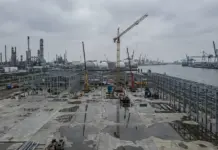
For POSCO Holdings, making hydrogen is not just a hype, but rather it is an important part of making steel more environmentally friendly. POSCO wants to cut CO₂ emissions through replacing some of the coal feed with renewable hydrogen in its blast furnaces. KIMM’s SOEC demo shows a local solution – making hydrogen on-site, which could as well cut logistics costs and make the company less dependent on imports.
KIER is the best at system integration, and KCERACELL makes the special ceramic cells that keep SOECs running smoothly without wearing out. It’s a classic win-win, all thanks to the MOTIE/KETEP framework that encourages national labs and research groups, as well as businesses, to work together so as to solve problems with technology and the supply chain.
And don’t think that steel is the only thing moving on. Chemical companies and shipping companies looking for fuels that don’t pollute the air, and even power plants looking for ways to keep the grid balanced could all go ahead and benefit from dependable on-site SOEC hydrogen. To make sure South Korea stays on the global hydrogen production map, demand must spread across industries.
From Plan to Reality
The story of hydrogen in South Korea began in 2019 with a national roadmap that set high goals when it comes to production capacity and fuel cell vehicles as well as infrastructure. The government’s most recent energy plan calls for 100 GW of renewable energy by 2030 and the gradual phase-out of coal. In that light, observing an SOEC system work perfectly at scale is far more than just a milestone. It is rather a proof that promises made in the lab can come true in real-world plants.
The successful demo has now led to a policy buffet with subsidies for hydrogen refueling stations, incentives for large industrial users, and an extra $29 million for research and development. These are the kinds of incentives you need so as to speed up commercialization and get South Korea ready to share its clean hydrogen technology along with other countries.
Problems and the Future
No sugarcoating here – going from 20 kW pilots to multi-megawatt powerhouses means a lot of work. You need to be able to make ceramic cells with very tight tolerances as well as elevated yields. Then there’s the problem of getting thermal systems to line up perfectly so that performance does not fluctuate. And let’s not forget about the infrastructure: pipelines and storage hubs. That all needs to be funded and developed in a coordinated way.
At the same time, research centers and private companies all over the world are also working hard in order to reach the same efficiency goals. But South Korea has an edge because it has strong government support, robust industry partnerships, and some of the best research and development institutions in the world. KIMM’s next-gen SOEC modules, which aim for more than 85% electrical efficiency and use AI-based diagnostics to find early signs of wear and tear, could as well prove to be the game-changer that speeds up the development of reliable commercial stacks.
In the Future
High-temperature electrolysis continues to grow increasingly nearer to being ready for the market, which is the most important thing for people who follow the industry. SOEC is a great fit for areas having a lot of manufacturing, like South Korea, because it can make use of waste heat from factories. It will be interesting to see how quickly real-world plants can go ahead and reach those great lab numbers as pilot projects move into full-scale deployment.
If one looks at a bigger picture, getting rid of the technical and logistical barriers could just as well open up a thriving domestic green hydrogen economy. This economy would reduce the dependency on imports, thereby creating clean-tech jobs, and boost exports. There are real problems, but the first 20kW-class anode SOEC system of South Korea from KIMM is a loud sign that green energy solutions can be cheaper and work better than one thought.
In the end, South Korea’s latest breakthrough isn’t just another tech demo which you can buy. It indicates that you can truly make a difference in industrial decarbonization and change the energy landscape when one combines smart policies with strategic R&D funding and collaboration across sectors.