


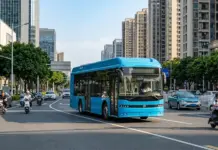

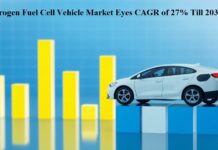


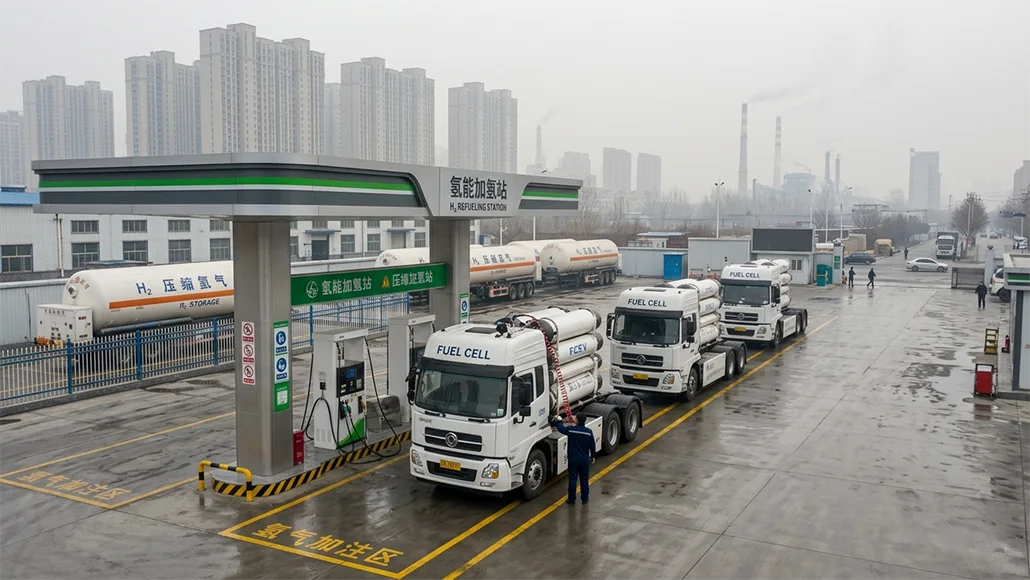

China has gone ahead and started a hydrogen application pilot program in order to speed up the development as well as the widespread usage pertaining to green hydrogen energy. The goal is to encourage technological innovation and at the same time make hydrogen power a new source of economic growth.
As per a circular from three government departments, including the Ministry of Industry and Information Technology, the country is looking out to have 100,000 fuel cell vehicles on the road by the end of this decade, which is twice as many as there are at present.
It is well to be noted that by 2030, it also wants to lower the price of hydrogen for the end users to less than 25 yuan, which is equivalent to $3.63 per kilogram and around 15 yuan in certain areas.
The fact is that pilot programs are beginning to help the green transition, and the central government is giving each chosen city cluster almost 1.6 billion yuan.
In early 2021, five city clusters had been chosen as hydrogen application pilot program areas for a preliminary four-year demonstration period. Interestingly, these were the Beijing-Tianjin-Hebei region, Zhengzhou in Henan Province, Shanghai, Guangdong Province, and Hebei Province.
Apparently, the hydrogen vehicle market in China went from a confident and aggressive growth in 2021–22 to a decline in the second half of 2023. This was followed by layoffs and financial losses, as well as a quiet exit from the market. The city clusters went on to sell 39,023 hydrogen vehicles during the time period, which happened to be less than the target of 50,000 units.
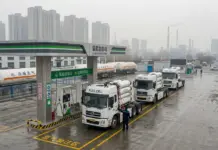
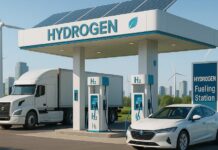
By the end of 2025, around 40,000 hydrogen fuel cell vehicles had been sold throughout the country. There were also 574 hydrogen refueling stations that had been built, with an overall daily refueling capacity of over 360 metric tons, which made China a leader in the industry globally.
According to Zheng Qiaoyun, who is a senior researcher at the China Society of Automotive Engineers, said the absence of refueling stations along with the high cost of hydrogen remain the problems that keep hydrogen fuel cell vehicles from becoming more popular.
Zheng says that in cities that are testing hydrogen, like the ones in the Beijing-Tianjin-Hebei region, Shanghai, and Guangdong, the price of hydrogen is at present between 35 and 76 yuan per kg. And across the country, there are not enough hydrogen refueling stations that could meet the daily needs of almost 4,000 to 5,000 heavy trucks.
The deputy director of the development institute at FAW Jiefang Group, Guo Ping, opines that hydrogen needs to cost less than 25 yuan per kg so as to be able to compete with diesel as well as natural gas.
He believed that by 2030, the price of hydrogen might as well drop to a level that would indeed make it competitive.
Guo said that hydrogen fuel cells are indeed much better as compared to power batteries for long-distance travel as well as cold weather. It is well to be noted that FAW Jiefang has built up reserves of hydrogen fuel cells as well as hydrogen internal combustion engines.
A member of the Chinese Academy of Sciences, Ouyang Minggao, believes that pure electric vehicles would be preferable for the heavy truck sector that operates less than 500 km. Hydrogen-powered heavy trucks will be better for ranges longer than 1,000 km, though.
Ouyang said that the future of new energy transportation is going to be mostly about electricity and hydrogen, just like gasoline and diesel are the main fuels for transportation right now. He said that hydrogen fuel cells would make up around 10% of the sector’s total energy use, while battery power would make up around 80%.
Automakers around the world are still working on hydrogen fuel cell technology, accelerating its move right from research in the lab to use on a large scale in business.
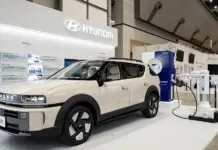
It is worth noting that Hyundai now offers more fuel cell vehicles, such as the ix35 Fuel Cell, the Nexo SUV, the Elec City bus, as well as the Xcient Fuel Cell heavy truck. At the same time, Toyota has gone on to release the Mirai, which happens to be a hydrogen-powered car that can go up to 850 km and also get refueled in three minutes.
Notably, Changan Automobile launched the Deepal SL03 hydrogen fuel cell version in China. It, by the way, is the first mass-produced hydrogen fuel cell sedan in the country, having a range of 730 km and being able to add 300 km of range, that too in just 15 minutes of refueling. Geely has also released the Farizon Homtruck series, which has in it the methanol-hydrogen hybrid electric supervans as well as big trucks.