
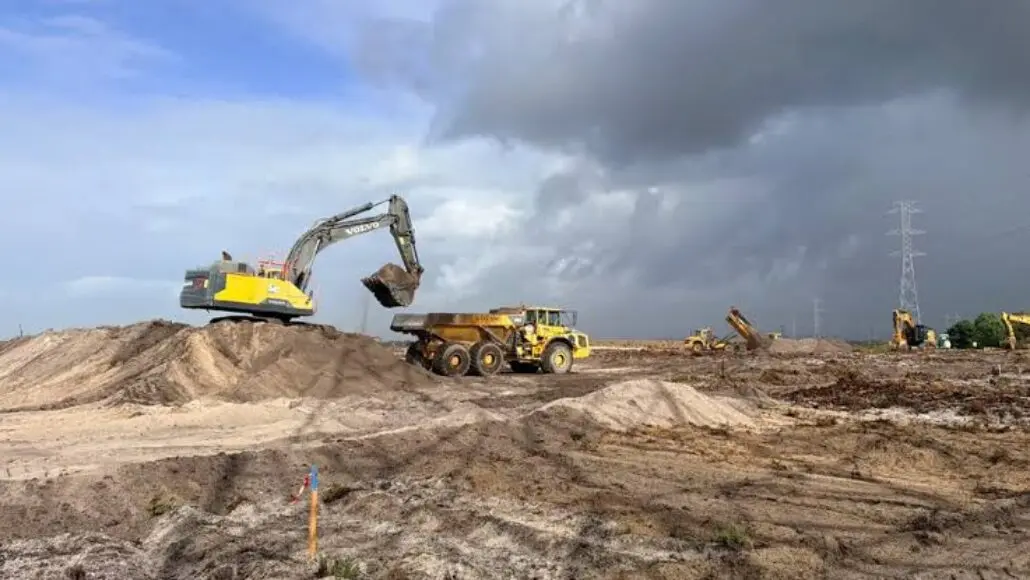

Construction work has started for the first stage of Portugal green hydrogen and ammonia project at Sines, which is a port town on the country’s Atlantic coast. The MadoquaPower2X site preparation signifies the move from authorisation to physical construction on one of the biggest hydrogen-to-ammonia projects in Europe.
Phase 1 – 500 MW Hydrogen and Ammonia at Sines
The first phase of the Portugal green hydrogen and ammonia project will aim for 500 MW of renewable electricity-powered electrolysis capacity. Yearly production is tuned at 51,000 tonnes a year of green hydrogen feeding 300,000 tonnes of green ammonia. Phase 1 is scheduled to be finished by June 2027.
The project is located in the Zona Industrial e Logística de Sines – ZILS, the main industrial port zone of Portugal, with direct connection to ammonia export infrastructure as well as deep-water shipping. MadoquaPower2X has 20-year land leases for 60 hectares of industrial land on the site.
Project Partners
The consortium behind the project is a blend of Portuguese, Danish, and Dutch interests. The Portuguese side is led by Madoqua Renewables. The technology and development partner is Dutch e-fuels developer Power2X. The project is supported by the financial endorsement of the Energy Transition Fund from Copenhagen Infrastructure Partners. The first phase has received a grant from the European Hydrogen Bank, but the financial conditions of that award have not been released publicly.
1.2 GW in the second phase is also planned
It is well to be noted that a second phase would boost the electrical interconnection from 560 MVA to 1,400 MVA. At this scale, hydrogen production goes up to about 150,000 tonnes a year, and the production of green ammonia exceeds one million tonnes a year. The plant will be powered by exclusive solar and wind farms to be developed in inland Portugal, feeding directly to the Sines facility, confirms MadoquaPower2X.
Phase 1 itself is expected to contribute around 20% of the national target for European green hydrogen production in Portugal, which has been set out in its hydrogen strategy EN-H2.