
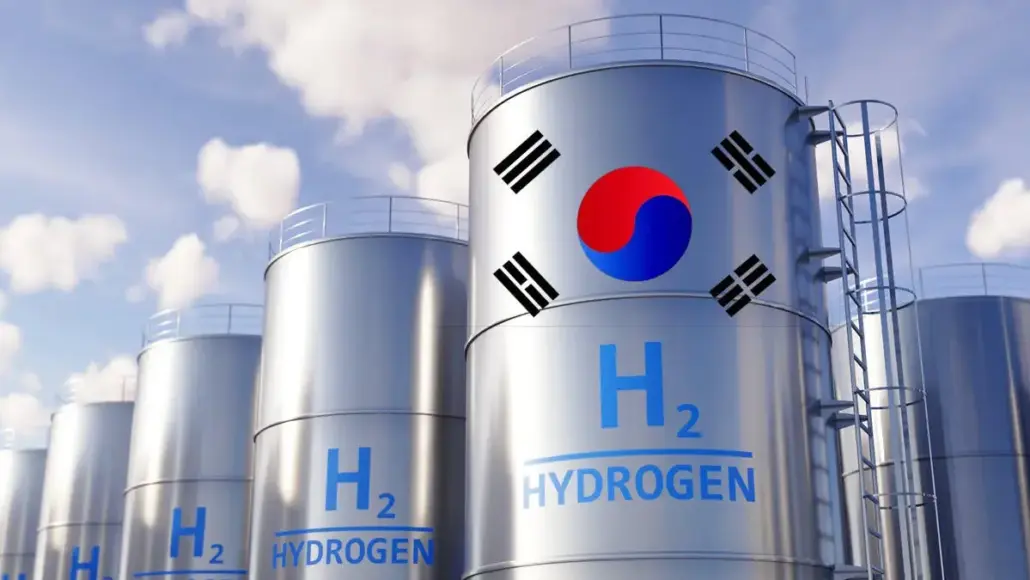

South Korea has launched its hydrogen power auction for 2026, with a yearly purchase of 500 GWh of clean hydrogen power, as compared to 3,000 GWh in 2025 and 6,500 GWh in 2024.
Another tender is for 930 GWh/year for general hydrogen power. Less volume of clean hydrogen available, with tougher bid evaluation criteria, means the bar is higher for developers looking for extended-term power contracts.
The auction proposed by the Ministry of Climate, Energy, and Environment on October 30 will include a preliminary evaluation centered only on non-price criteria, with price and non-price criteria each making up 50% of the final assessment.
One can expect to have preferred bidders selected in the clean hydrogen market, around June 2027.
The generation has to start by 2030, with a grace period of no more than three years for postponements.
The successful bidders in the clean hydrogen industry will be awarded 15-year contracts, a sustainable revenue framework for suitable projects. However, this reduces the annual procurement, meaning the amount of generation that can be supported through this auction is limited.
The drop from 6,500 GWh in 2024 to 500 GWh in 2026 does not mean that future hydrogen consumption or installed capacity will be reduced by the same amount. But it limits the opportunity to purchase to those developers preparing exclusive hydrogen-fired plants or plants for co-firing hydrogen.
The tender levels are in gigawatt-hours per year and represent electricity output, not installed capacity. The investment required will be contingent on the plant size as well as the number of hours of operation of the plant, the conversion effectiveness, and the fuel costs, as well as the technical setup of each individual project.
The three-year postponement recognizes the construction needs when it comes to hydrogen co-firing and specialised hydrogen-fired facilities. Developers still have to deal with equipment shipment, fuel supply, plant preparedness, and contractual commissioning responsibilities.
The new assessment system will attach more importance to non-price factors in project selection. Previously the price was 60% of the assessment, and non-price criteria made up 40%. The new framework has a first stage where bids are assessed on non-price criteria only and a final stage where price and non-price elements are weighted equally at 50% of the assessment. The pre-qualifying phase will select bids equal to 1.5 times the tender volume.
Non-price factors include the quality of clean hydrogen used, the stability of fuel procurement, greenhouse gas decreases, and benefits to domestic industry along with the economy. The new weighting might favor projects that have solid long-term supply contracts and better emissions outcomes, but the result will be contingent on the comprehensive evaluation procedure and proof needed from bidders.
The clean hydrogen certification system of South Korea has an emissions limit of no more than 4 kilograms of carbon dioxide equivalent per kilogram of hydrogen generated. Eligibility is thus based on verified emissions intensity, not simply whether hydrogen is advertised as green or low carbon.
Reaching that limit does not remove the requirement to evaluate the full generation pathway. The climate effect of electricity generated with hydrogen also relies on the handling and transport of the fuel, the effectiveness of the conversion process, and the emissions from any extra fuels that are used in co-firing.
Coal-ammonia co-firing is not eligible for 500 GWh of clean hydrogen bidding
The government has ruled out coal-ammonia co-firing from the clean hydrogen power auction scheduled for 2026 in fulfilment of its strategy to completely phase out coal-fired power generation by 2040.
The decision reduces the technologies that are eligible for support and severs the link between clean hydrogen purchase and efforts to extend the life of prevailing coal assets.
The exclusion changes the clean hydrogen auction to other acceptable generation arrangements. Instead of using coal-ammonia co-firing as a transition option, developers have to prove that they can meet the market’s demands on fuel and emissions.
The stand-alone general hydrogen tender calls for an annual procurement of 930 GWh for a contract duration of 20 years. Successful projects will need to start generating after a two-year preparation period by 2029. The ministry has also raised the ecological assessment bar for this section, which includes a measure of carbon capture, utilization, and storage plans.
It is well to be noted that the general hydrogen market has distinct fuel eligibility and contractual demands, so its volume should not be considered as electricity produced solely from verified clean hydrogen. The outcome in ecological terms will be dependent on the level of intensity of the fuel emissions and how efficient any carbon capture procedures suggested are.
There is also an additional delivery challenge with the preceding commissioning time frame. Developers will need to lock in equipment, wrap up construction, set up grid connections, and lock in a dependable fuel supply in less time than projects covered in the clean hydrogen tender.
The revised assessment framework captures project quality but does not tackle the fundamental economics of hydrogen-fired generation. The cost of manufacturing, transport, and storage, as well as conversion, determines the overall cost of electricity. Developers also must secure enough fuel so as to meet stipulated output throughout the lifespan of their agreements.
The increased focus on the stability of fuel procurement is a reflection of these risks. If a project cannot show a secure supply chain or meet the emissions standards required, then competitive prices for electricity will be of less importance.
There will only be 500 GWh per year in the clean hydrogen bidding process, so developers will have to be more careful in their procurement. The outcomes will indicate whether the projects are capable of meeting the updated specifications at acceptable commercial costs, while the independent general hydrogen tender will evaluate another set of fuel, environmental, and delivery standards.