





















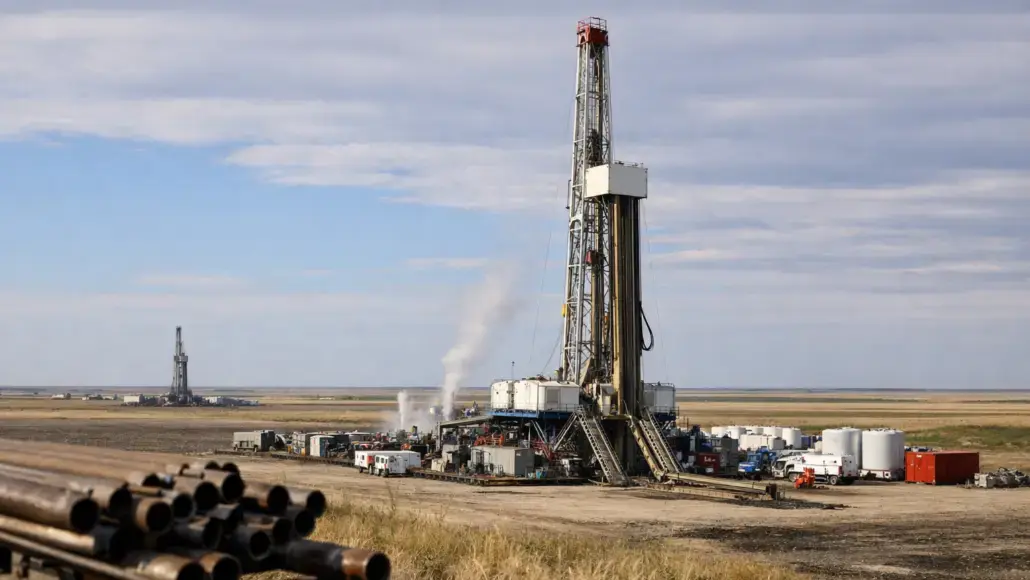

MAX Power Mining Corp. reported that with the successful casing of Lawson 2, commercial validation drilling has begun at the Lawson 3 well. This achievement builds upon evidence for a large natural hydrogen system in the 28-square-kilometre Lawson Complex at Saskatchewan.
It is well to be noted that Lawson 3 is being drilled about 2.2 km east of Lawson 2 and 1.2 km south of the initial discovery of Lawson 1. The placement is intended to aid in triangulating the deposit for geological modelling by GLJ Ltd. Data collected from the first two wells will guide the best placement for Lawson 4, with completion evaluation and a possible production well to follow.
Lawson 2 logged about 860 meters of constant natural hydrogen readings, the most powerful readings to date at the project. It also confirmed the presence of a large fracture system as well as viable source rocks. The well was drilled to an overall depth of 2,440 meters and returned 120 meters of core, which includes a record 89.2 meters of core from the Precambrian basement complex for just one Saskatchewan well.
Apparently, the ongoing drilling program is designed to assess the extent and continuity of what could go on to become the first large natural hydrogen system and that too commercial across the world, the management said.
The work also enhances the geological model over the larger 1,852-square-kilometre Lawson and Aurora project portfolio.
This is a significant milestone, as it can help make natural hydrogen a clean energy source. Natural hydrogen is found in the earth’s crust and might provide a low-carbon substitute to conventional ways of producing hydrogen that call for energy input. Commercialization of this project would put Saskatchewan on the map as a leader in the rising natural hydrogen industry.
The disciplined approach by MAX Power from first discovery to delineation drilling demonstrates the commitment by the company to conduct a thorough assessment of the resource. The triangulation strategy with Lawson 3 is an important step to learn the degree of the hydrogen buildup, which is important for subsequent production planning.
Investors and industry watchers will be observing closely as the company moves to completion testing and possible production. A successful outcome to these efforts could have major consequences for the energy sector, perhaps offering a new and sustainable hydrogen source.